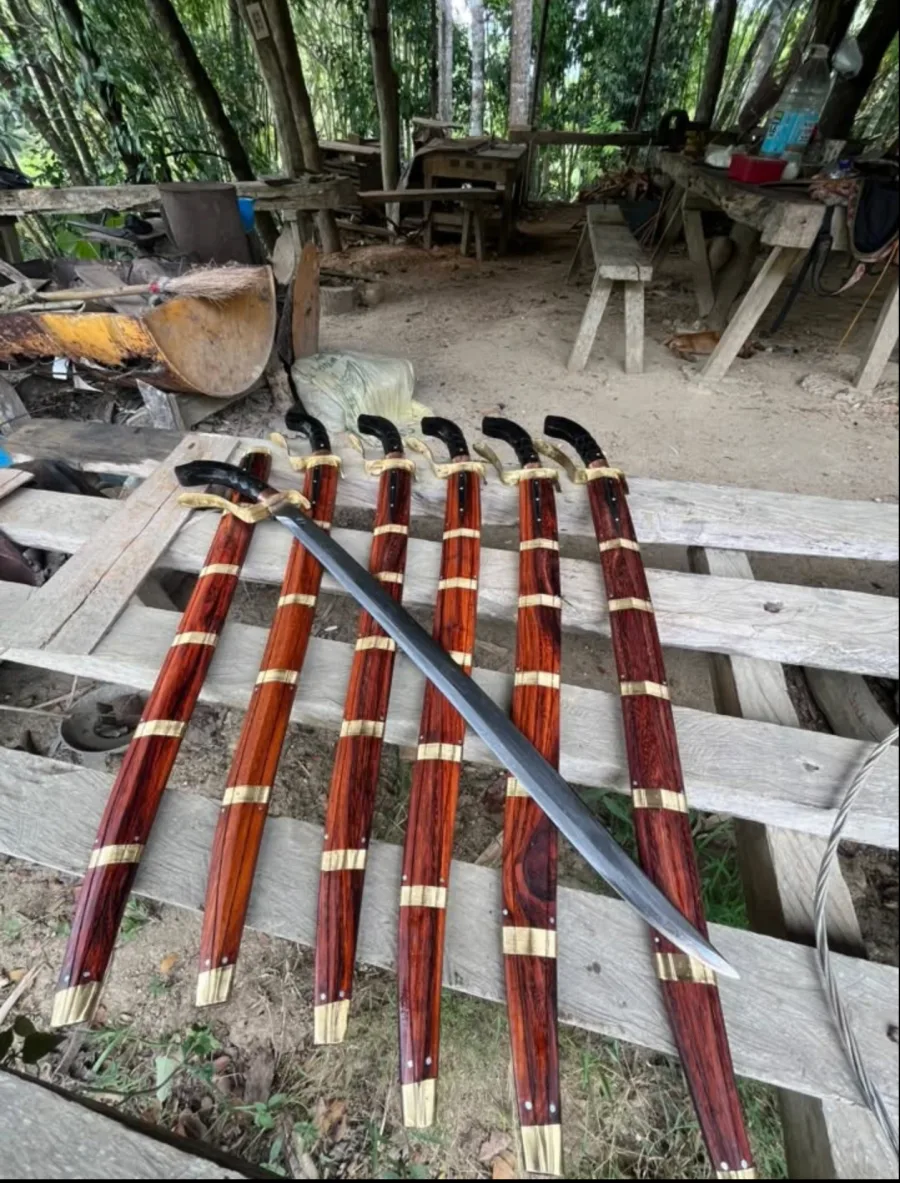
Cid Cempron did not set out to make knives. He took a master’s degree in philosophy at the Ateneo de Manila and carried a lifelong appetite for history and the social sciences, which is what brought him to the town of Sikatuna in the interior of Bohol. There he came across a family of third-generation smiths, the Prietos, and asked them to make him an all-purpose blade.
The blade was so good that friends asked for one. Then acquaintances. Then strangers. So he went back to the family with a proposal.
“I told them, I would help you. I will do the designs and provide you with quality materials.”Cid Cempron, to Esquire Philippines
The Prieto forge
The patriarch, Eugenio Prieto, learned the craft from the Caybot clan of Cancatac in the neighbouring town of Corella. It was through his son Teodaldo that the family’s stamp, two letters struck into the steel, became known: the “TP” blade, sold to farmers and households across Bohol and the nearby towns, and carried as far as Mindanao. Holding one, as Cid puts it, is holding a piece of art, an everyday tool and a weapon at once.
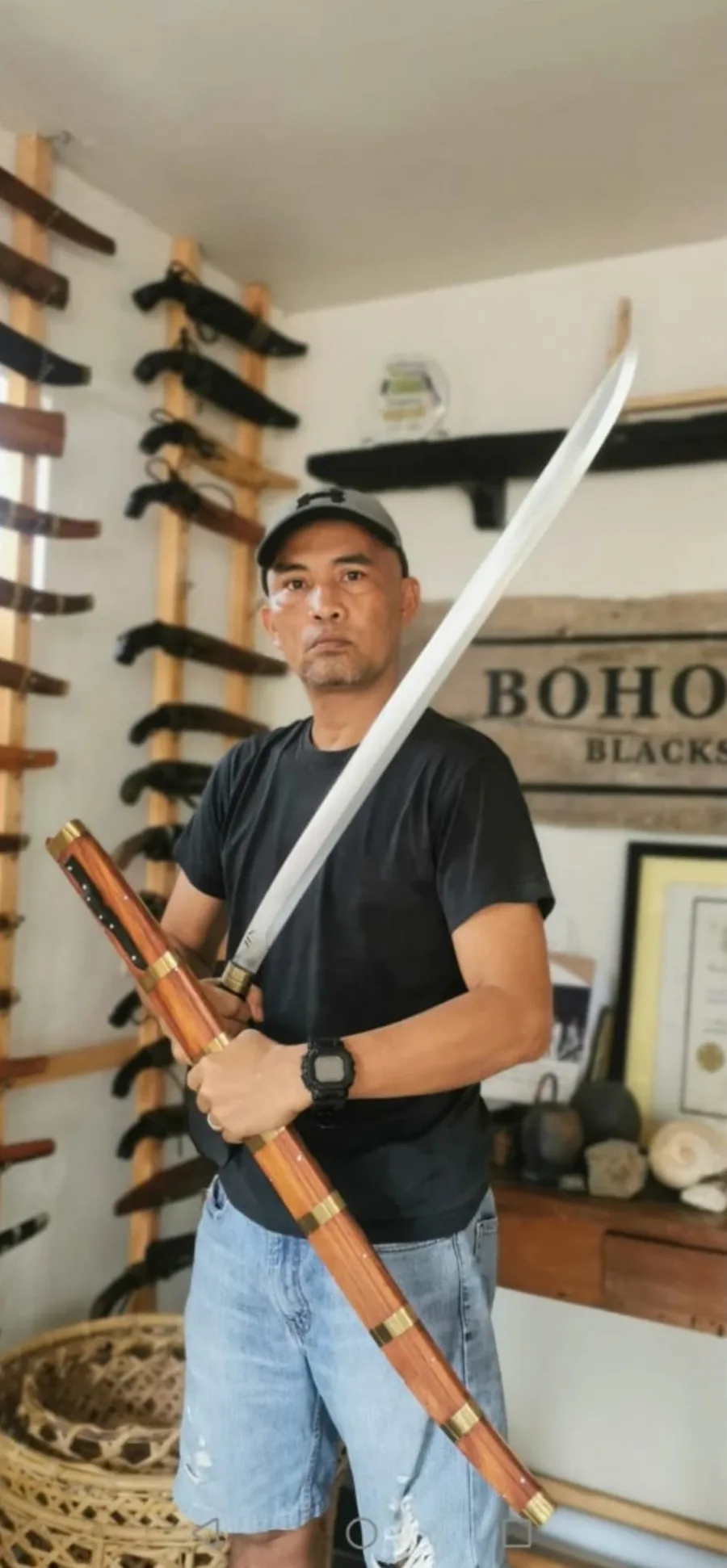
In 2018 the arrangement was made formal. The Prietos forge. Cid designs, sources the steel, the horn, the rosewood, the brass and the bronze, and deals with the customers, many of whom are collectors with exact specifications and no interest in haggling. He named the enterprise after the province, so that nobody would mistake where the blades come from. Other makers around the country, from Carigara in Leyte to Palawan, Panay and Ilocos, have since started naming their lines after their own home towns.
What the steel is, and why
The blades are forged from the leaf springs of old vehicles, and not just any: the smiths use only the original springs made in Japan, from models like the Toyota Corolla and the Isuzu Elf, because the steel is consistent and clean. A spring that has flexed under a truck for twenty years without cracking has already proven it can take a beating. Forged, hardened and tempered, it makes an edge that is hard enough to stay sharp and tough enough not to chip.
The handles are carabao horn or Philippine rosewood, the local tindalo. Horn solid enough to carve takes a carabao twenty to twenty-five years to grow, and each animal gives two. The sheaths are hardwood, decorated with bronze and brass: bronze nails at over nine hundred pesos a kilo, sheet brass at two and a half thousand a sheet. “We are the only ones using that,” Cid says.
“The rarer the material, the more difficult it is to source, and the more it possesses a story.”Cid Cempron
Named after the first hand
After a Facebook page and an Instagram account, orders arrived faster than anyone expected, and the small forge now makes up to forty blades a month. Chefs began to call. When Jordy Navarra of Toyo Eatery visited and asked for a special knife, Cid built a kitchen at the forge and named the knife and the kitchen after him. When chef and food journalist Angelo Comsti sent a set of specifications for a blade the shop had never made, they made ten, and the Comsti knife has been in the collection ever since.
That became the rule of the house: whoever commissions the first of a new design, the blade carries their name.
Sharpest in Bohol
Ask about sharpness and Cid will not argue. He will ask for a sheet of paper and cut it in the air. “The sharpening and the finishing, that is where we are good,” he says. He has toured the forges of the island and knows what the others make. Factory knives are set on a machine and come out identical. These are made straight because a smith made them straight, and sharp because somebody spent the last hour of each blade on a stone.
“Walang mintis. Straight yung gawa. Kami lang meron nito.”No misses. The work is straight. Only we have this.
The blades go to collectors and cooks in the United States, Switzerland, Canada, Australia and beyond, and each one takes up to thirty days to make, depending on what you ask for. The forge is still in Sikatuna. The stamp is still struck by hand.